By-laws
Future Generations Empowerment
- All business and affairs of The Organization are governed by these by-laws. The governing Board of Directors may create additional policies.
- Policies of the organization take effect when a majority of the Board members present (in a meeting where there is a quorum) vote to approve a given policy.
- By-laws of the organization may be changed if the proposed By-law changes are circulated to all members of the Board and two-thirds of the Organization’s Board members approve. Additionally, for By-law changes, a two-thirds majority must occur during two successive publicized meetings of the Board; a single vote does not constitute a By-law revision even on an interim basis.
- Board members may not cast their ballots by proxy. Telephonic or electronic balloting and attendance at meetings are permitted. If full board participation is not present at the meeting, written meeting minutes containing all resolutions must be sent to the absent member(s).
- Any action governing the organization may be taken without notice of meeting if evidenced by 100% of all Board members being party to and approving such action. This shall apply specifically to electronically circulated decisions where proof must be provided that all Board members received the proposed action and chose (for whatever reason) not to respond.
- Committees (standing or ad hoc) may be appointed by the Board of Directors. An Executive Committee is specifically barred.
- The Annual Meeting of the Board of Directors will occur each year in June or July. The Board members may call other meetings as it deems necessary for the conduct of the organization’s business. At least one additional meeting during the year is assumed.
- Each meeting shall be announced to the Board members at least two weeks before the date.
- The Board’s Secretary will submit a written report prior to the Annual Meeting that provides a) an overall review of institutional status, b) specific reports on the programs in each Activity Center, c) a report on the prior year’s financial activities, d) proposals for activities for the coming year by Activity Center, and d) a proposed budget for the coming year. The assembly of these written reports shall be prepared with adequate supporting materials such that over time these reports constitute the organization’s official historical record. Reports will also be prepared by the Board’s Secretary prior to other meetings, stating the administration’s positions on the agenda at hand.
- Meetings may be called by either the Board Chair or in writing to all by any two other Board members.
- Meetings shall be held at the principal office of the organization or at such other suitable place convenient to the members of the Board or on web-based platforms as the Board may determine.
- A quorum of the members of the Board will be a majority (51% or more) of the members. Unless provided for elsewhere in these By-laws, at all board meetings, the votes of a majority (51%) of the members of the Board at which a quorum is present shall constitute the decision of the Board.
- Board meetings shall be open to members of the Senior Management Team. If the Senior Management Team is not invited, minutes of the meeting will be circulated. This excepts Executive Sessions that may be called by the Board to discuss sensitive personnel or matters involving legal or liability issues for the organization. A decision to call an Executive Session shall be made by the Board Chair or two other members of the Board.
- Separate from a meeting of the Board where the will of the Board is being expressed, individual members of the Board cannot speak for the Board. At these times, Board members are speaking as individuals.
- Membership on the Board of Directors shall consist of between three (3) and eight (8) members. In the event a vacancy exists, the Board may fill the vacancy in between meetings by a majority written vote of the members.
- Each Board member’s term shall commence as of the annual meeting at which that election took place. If the election is between annual meetings, the term is assumed to begin at the annual meeting prior to that election. Terms of office will be for three years and staggered in thirds to ensure organizational memory. Initial terms may be one, two, or three years. All term counting is effective with the date of these By-laws.
- A Board member may resign at any time by providing written notice to the Chair or the resignation may be submitted verbally at a scheduled meeting of the Board of Directors.
- Any member of the Board of Directors shall be removed from office, for cause, at any meeting of the Board by a vote of two-thirds of the Board members then in office. Any member may be removed if the proposal is circulated in writing at least two weeks before a scheduled meeting of the Board and if at that meeting at which quorum is present, a two-thirds vote occurs.
- Any member of the Board missing more than 50% of the meetings during a two-year period of time will be asked to resign.
- Vacancies on the Board may be filled at any regular meeting of the Board.
- Board members receive no compensation. Board members who also serve as Officers of the Organization may receive compensation as Officers. Board members may, however, be paid as consultants to the Organization.
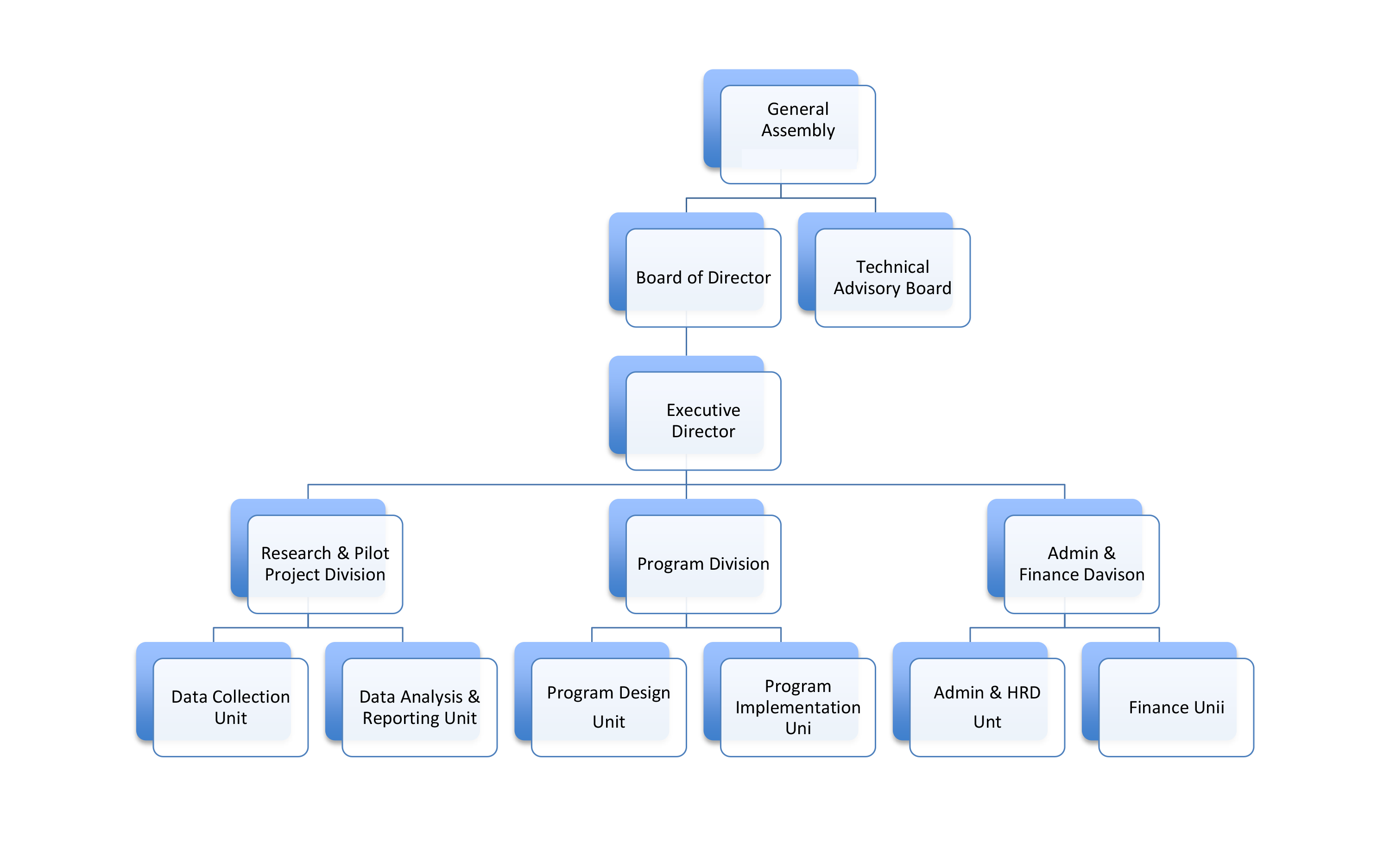
- The officers of the Board of Directors shall be the Chair, Treasurer, and Secretary. It is desirable but not essential that there also be a Vice Chair.
- Officers shall hold office at the pleasure of the Board of Directors and shall be subject to removal by the affirmative vote of a majority of the entire Board of Directors without prejudice to any contract rights such officers may have as those contracts continue for the official duties.
(a) The Board of Directors shall have the power to manage the property and the business of the Organization and shall have the power to carry out other functions that are permitted by the Articles of Incorporation of the Kingdom of Sweden or these By-laws, except insofar as such powers may be limited by law. These powers shall include but are not limited to the following:
i. Appointing or removing the officers of the Organization;
ii. Authorizing or delegating authorization through the annual operating plan and budget and authorizing material expenses not otherwise budgeted for, given the availability of funds;
iii. Authorizing the purchase or rental of land and buildings;
iv. Instituting and promoting fundraising efforts of the organization;
v. Authorizing the incurring of debts by the Organization and the securing thereof by mortgage and pledge of real and personal property, tangible and intangible;
vi. Establishing and reviewing personnel policies and procedures.
(b) Powers and Duties of Board Chair
The Chair shall preside at all meetings of the Board of Directors, shall have the right to vote on all motions, shall appoint all committees, and shall have such other powers and duties as the Board may prescribe. The Chair is responsible for upholding the By-laws. The Chair shall conduct meetings in accord with Robert’s Rules of Order. In the absence of the Chair, the Vice-Chair, then the Secretary, then the Treasurer is responsible for performing the duties of the office of the Chair.
(c) Powers and Duties of Board Secretary
The Secretary (who may be a member of the board or a staff member acting in service to the board) is responsible for keeping the minutes of Board meetings, maintaining all institutional history and documentation, giving proper notice of all meetings of the Board, and record appointment of all committees of the Board and members of the administrative staff. The Secretary shall report to the Chair and other members of the Board.
(d) Powers and Duties of the Board Treasurer
The Treasurer will work with a professional trained in nonprofit accounting and hired by the Organization. An audit in accord with the standards of the Kingdom of Sweden is required, except insofar as donor-received funds may require.
i. The Treasurer is responsible for keeping accurate accounts of all financial matters to comply with laws and by-laws and to obey all lawful orders of government as well as the Board respecting funds, property, and the accounts of the organization.
ii. The Treasurer shall advise the Board on financial matters and shall assure that financial policies are developed and adhered to by all members of the organization.
iii. The Treasurer is responsible for ensuring that accurate reports of financial transactions and financial conditions are conveyed to the Board of Directors in a timely manner.
All employees shall abide by the laws of the respective legal jurisdictions where they are working at that time). Employees will also be governed by the Organization’s Policies and Procedures Manual.
The Board of Directors functions as a committee of the whole; an Executive Committee is specifically disallowed. There may be such standing or ad hoc committees as the Board may establish for the discharge of particular duties..
A member of the Board of Directors shall be considered to have a conflict of interest if: a. Such a Board member has existing or potential financial or other interests that impair or reasonably appear to impair the Board’s independent and unbiased judgment in discharging the Board’s responsibility to the organization. b. All members shall disclose to the Board any possible conflict at the earliest practical time. No member shall vote on any matter under consideration at a Board or committee meeting in which such member has a conflict. The minutes shall reflect that a disclosure was made and that the member abstained from voting. Any member who is uncertain whether s/he has a conflict of interest in any matter may request the Board to determine whether a conflict of interest exists, and the Board shall resolve the question by majority vote. A non-disclosed conflict of interest is cause for immediate dismissal from the Board. A conflict of interest is a transaction within the Organization in which a Board member or employee has a direct or indirect benefit of gain. A conflict of interest is not the basis for imposing liability if all of the following apply: a. The transaction is fair to the Organization at the time it was entered into; b. Material facts and the Board member’s or employee’s interests are disclosed in writing; c. The Board in good faith determines (in writing with explanation) that after reasonable investigation that under the circumstances, the Organization could not obtain a more advantageous arrangement with reasonable effort; d. The Organization enters into the transaction for its own benefit.
The Organization follows a uniform policy of nondiscrimination and does not discriminate in its employment, education actions, services, and policies on the basis of race, color, creed, religion, national/ethnic origin, gender, sexual orientation, gender identity, or age.
The organization’s accounting year is from January 1st to December 31st.
FGEO is organized exclusively for charitable, educational, and scientific purposes. No substantial part of the activities of the organization shall involve propaganda or otherwise attempting to influence legislation, and the organization shall not participate in or intervene in (including the publishing or distribution of statements) any political campaign (domestic or foreign) or on behalf of any candidate for public office. The organization conducts its affairs in accordance with Swedish laws.
The following individuals, as Initial Interim Board members, do hereby attest to an agreement with the By-laws written above. Moreover, the following individuals also affirm in good faith their intention to support the creation of a permanent board that shall be designated as the Founding Members with others so designated at such time within the coming year that the Founding Board is established and voted in by this Interim Board.
- Jonathan M. Feldman, Chair
- Andrew Liebmann, Treasurer
- Waris Miratif, Secretary
- Ajmal Shirzai, Board Member
- Jonathan Collins, Board Member